
American Coinage in 70s: Most Promising Issues Overview
American coinage of the 1970s reflects a decade under pressure. Inflation rose sharply, silver vanished from circulation, and the U.S. Mint was forced to rethink materials, designs, and production priorities. For collectors, this created a distinctive mix: high mintages paired with unusual transitions, patriotic themes, and a steady flow of varieties and errors.
Unlike earlier silver-heavy decades, most 1970s coins were struck in copper-nickel clad. At first glance, that limits appeal. In practice, it shifts attention toward proof issues, low-mintage varieties, and visible hub or die anomalies of the 1976 quarter and other issues—areas where collector demand remains strong.

What Defines Promising 1970s Issues
Coins from this decade tend to fall into three collectible categories:
- Transitional designs, introduced during metal or policy changes
- Commemorative themes, especially tied to the Bicentennial
- Varieties and errors, created by heavy production and die reuse
This structure makes the 1970s ideal for focused collecting. A thoughtful set can be assembled without chasing extreme rarities or stretching beyond a few hundred dollars.
Economic Pressure and Mint Decisions
The early 1970s were shaped by:
- Rising metal costs
- Removal of silver from circulating coinage
- Public resistance to new designs
These forces explain why many coins of the era look conservative on the surface yet hide technical quirks underneath. The Mint emphasized volume and durability. Collectors now benefit from the side effects.
Bicentennial Planning Sets the Tone
Preparation for America’s 200th anniversary dominated mid-decade production. Special dual-dated designs appeared on quarters, half dollars, and dollars. While billions were struck, not all versions were equal, and a quick check via the best coin value app proves that.
Early planning and rushed execution led to:
- Design hub changes
- Doubled dies
- Off-center and planchet errors
This combination keeps Bicentennial-era coins central to any discussion of 1970s collectibles.
Why High Mintage Does Not Kill Interest
A common misconception is that high production numbers eliminate upside. In reality, condition rarity and error visibility matter more.
Collectors focus on:
- Proof and silver issues
- Recognizable doubled dies
- Coins tied to first-year or last-year changes
That approach explains why select 1970s coins regularly appear in auctions with four-figure results, even though most examples remain worth face value.
Snapshot: What to Watch in 1970s Coinage
| Factor | Why It Matters |
| Metal changes | Define transitional appeal |
| Commemorative designs | Anchor historical interest |
| Proof and silver issues | Create built-in scarcity |
| Die varieties | Drive collector premiums |
Understanding this framework makes it easier to identify which 1970s issues deserve closer attention. The next step is examining specific coins that consistently stand out within the decade.
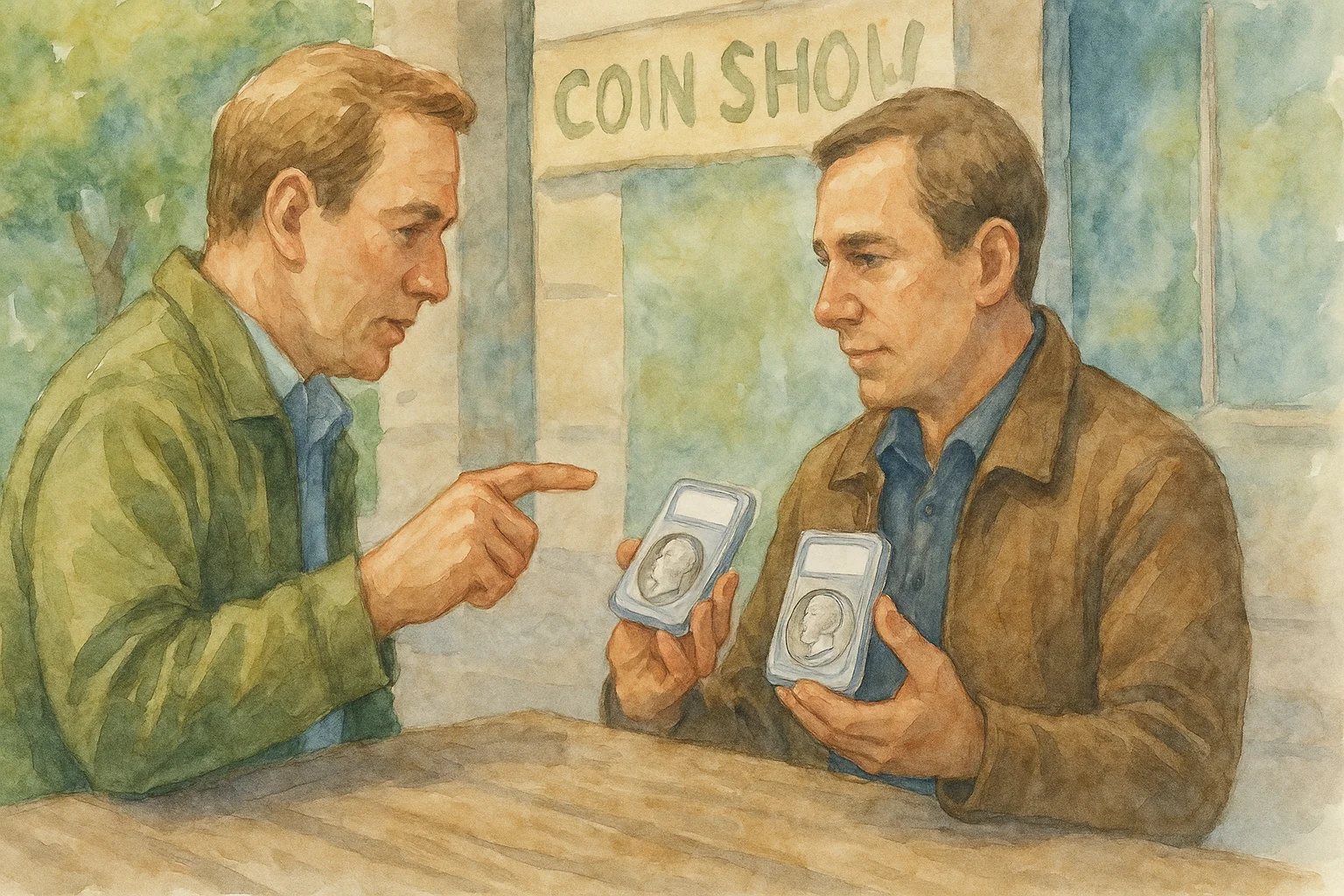
Bicentennial Quarters and Eisenhower Dollars: The Core of 1970s Collecting
Two issues dominate any serious look at 1970s U.S. coinage: Bicentennial quarters and Eisenhower dollars. Both were struck in massive numbers, yet both produced versions that remain consistently collectible.
Bicentennial Quarters (1975–1976)
The Bicentennial quarter replaced the standard reverse with a colonial drummer, paired with the dual date 1776–1976. Philadelphia and Denver produced more than 1.6 billion clad coins, keeping most examples at face value.
Collector interest rises sharply in specific categories:
- San Francisco silver proofs (40%), struck for collectors
- Doubled Die Obverses (FS-101/102) with visible LIBERTY doubling
- Mechanical errors, including off-center strikes and clips
Silver S proofs typically trade between $10 and $50, supported by metal value and steady demand. The DDO varieties define the high end. Certified examples range from $500 to well over $8,000, driven by grade and clarity of doubling. Off-center strikes with the date fully visible often sell for $100–500.
These coins reward targeted searching rather than bulk accumulation, so using a coin identification app to check your change might bring you fortune.
Eisenhower Dollars (1971–1978)
The Eisenhower dollar represents the largest circulating U.S. coin of the clad era. Its moon-landing reverse and presidential portrait capture the early Space Age mindset.
Most business strikes remain common. The promise lies in defined varieties and silver issues:
- 1971-S and 1974-S silver proofs, struck in 40% silver
- 1972 Type 2 reverse, with low-relief Earth details
- Low-mintage proofs, especially 1973-S
Silver proofs commonly sell between $20 and $100, depending on grade and packaging. The 1972 Type 2 is a practical target, often found around $15–40 in Mint State. Scarcer proofs climb higher due to limited production rather than hype.
Snapshot: Key 1970s Standouts
| Issue | Key Appeal | Typical Value |
| 1976-D Bicentennial DDO | Strong LIBERTY doubling | $500–8,000 |
| 1976-S Silver Quarter | 40% silver proof | $10–50 |
| 1971-S Ike Silver Proof | First-year silver | $20–100 |
| 1972 Type 2 Ike | Low-relief reverse | $15–40 |
These two series define the decade. They combine symbolism, transition, and variety—qualities that continue to attract collectors looking beyond surface-level abundance.
Lincoln Memorial Cents — Errors That Outgrew Their Face Value
Beyond quarters and dollars, the 1970s produced two additional areas that continue to reward focused collectors: Lincoln Memorial cent varieties and the short-lived Susan B. Anthony dollar. Both reflect experimentation during a decade of economic strain and changing public habits.
The 1970s are a landmark era for modern cent varieties. Heavy hub use and production pressure created some of the most dramatic double dies of the 20th century.
Key issues to know:
- 1970-S Large Date / Small Date DDO with strong obverse doubling
- 1972 Philadelphia Doubled Die Obverse, visible on LIBERTY and IN GOD WE TRUST
These coins still surface in circulation and mixed rolls. Market results depend on grade. Lower Mint State examples often trade in the $100–1,000 range. High-grade, sharply struck pieces have reached five figures at auction. Their appeal comes from visibility and documentation, not novelty.
Susan B. Anthony Dollars (1979–1981) — A Transitional Experiment
Introduced at the end of the decade, the Susan B. Anthony dollar reflects the Mint’s attempt to modernize circulating coinage. Public resistance limited success, but collectors gained a compact, clearly defined series.
Standout varieties include:
- 1979-P Wide Rim (Near Date), easily distinguished and widely collected
- 1979-S Type 2 proof, with clear, well-defined mint mark
These coins mark the first circulating U.S. dollar to feature a woman. Prices remain accessible. Wide Rim business strikes typically sell between $50 and $200, while Type 2 proofs often sit around $15–40 in attractive condition.
Building a Focused 1970s Collection
The decade works best as a thematic set, not a bullion play. A balanced approach keeps costs controlled while covering the most promising ground.
A practical starter framework:
- One Bicentennial silver proof quarter
- One Eisenhower silver proof or Type 2 variety
- One major Lincoln cent doubled die
- One Susan B. Anthony variety
Many collectors organize and screen finds with tools like the Coin ID Scanner app, using photo-based identification to confirm year, composition, weight, and standard specifications while sorting jars, rolls, or inherited lots from the era.
American coinage of the 1970s does not rely on scarcity alone. Its strength lies in transition. Inflation, metal changes, commemorative designs, and production shortcuts created a landscape where a small number of coins stand far above the rest.
For collectors who value history paired with measurable upside, the 1970s remain a productive and approachable decade—best explored with selectivity rather than volume.
Recent Posts

Our partners:
Undercurrent Voices© 2026. All rights reserved.